
Updated September 2026: I rechecked the coverage, smoke CADR, dimensions, weight, filter schedule, and current model options against AirDoctor’s product and support pages. Prices and promotions change, so I have not listed a fixed price.
Disclosure: This article contains affiliate links. If you buy through one of them, HomeVib may earn a commission at no extra cost to you.
I have not tested the AirDoctor 4000 in my home. This review is based on current manufacturer specifications, AirDoctor’s support documents, EPA guidance, and a comparison with the AirDoctor 3500 that I have used for several years.
Quick verdict
The AirDoctor 4000 is the model I would look at for a large bedroom, living room, or open-plan area where the slimmer 3500 is not quite enough. AirDoctor rates it for 694 square feet at four air changes per hour, and its smoke CADR is 370 CFM. That is useful airflow from a unit with a fairly small round footprint.
The tradeoffs are the cost of replacement filters, the sound at higher fan speeds, and the lack of independent hands-on measurements in this review. If your room is smaller or floor space is tight, the AirDoctor 3500 may be the easier fit. For a much larger open area, compare the 4000 with the 5500 before buying.
AirDoctor 4000 specifications
| Specification | AirDoctor 4000 |
|---|---|
| Recommended room size | 694 sq. ft. at 4 air changes per hour |
| Smoke CADR | 370 CFM |
| Filtration | Pre-filter, Carbon/VOC filter, and UltraHEPA filter |
| Dimensions | 13.9 inches deep and 28 inches high, as listed by AirDoctor |
| Weight | 15.8 lb |
| Versions | Classic and Smart |
| Typical filter interval | About 6 months for both filter types, depending on use and air quality |
These are manufacturer specifications, not measurements I took myself. Room shape, ceiling height, doors, windows, fan speed, and the source of the pollution can all affect real performance.
Coverage and airflow
The 694-square-foot figure is based on four air changes per hour. That matters because some purifier listings lead with a much larger number based on only one air change per hour. For smoke, dust, and other particles that keep entering a room, more frequent circulation is the more useful comparison.
The 370 CFM smoke CADR also gives you a better way to compare the 4000 with models from other brands. CADR is not the whole story, but it is more helpful than marketing language about “large rooms.”
Do not expect any portable purifier to fix every indoor-air problem. The EPA notes that air cleaners can reduce some pollutants, but they cannot remove all pollutants from a home. Ventilation and removing the source still matter.
Filters and maintenance
The AirDoctor 4000 uses three stages:
- Pre-filter: catches larger debris such as hair and lint before it reaches the main filters.
- Carbon/VOC filter: is intended for odors, smoke gases, and some volatile organic compounds.
- UltraHEPA filter: handles fine airborne particles. AirDoctor says its filter was tested to capture 99.99% of particles down to 0.003 microns under laboratory conditions.
AirDoctor’s support page recommends replacing both filter types in the 4000 about every six months. Treat that as a guideline, not a promise. A purifier used near wildfire smoke, pets, heavy cooking, or renovation dust may need attention sooner. Check the replacement-filter price before buying the machine, because that is the main ongoing cost.
Classic or Smart?
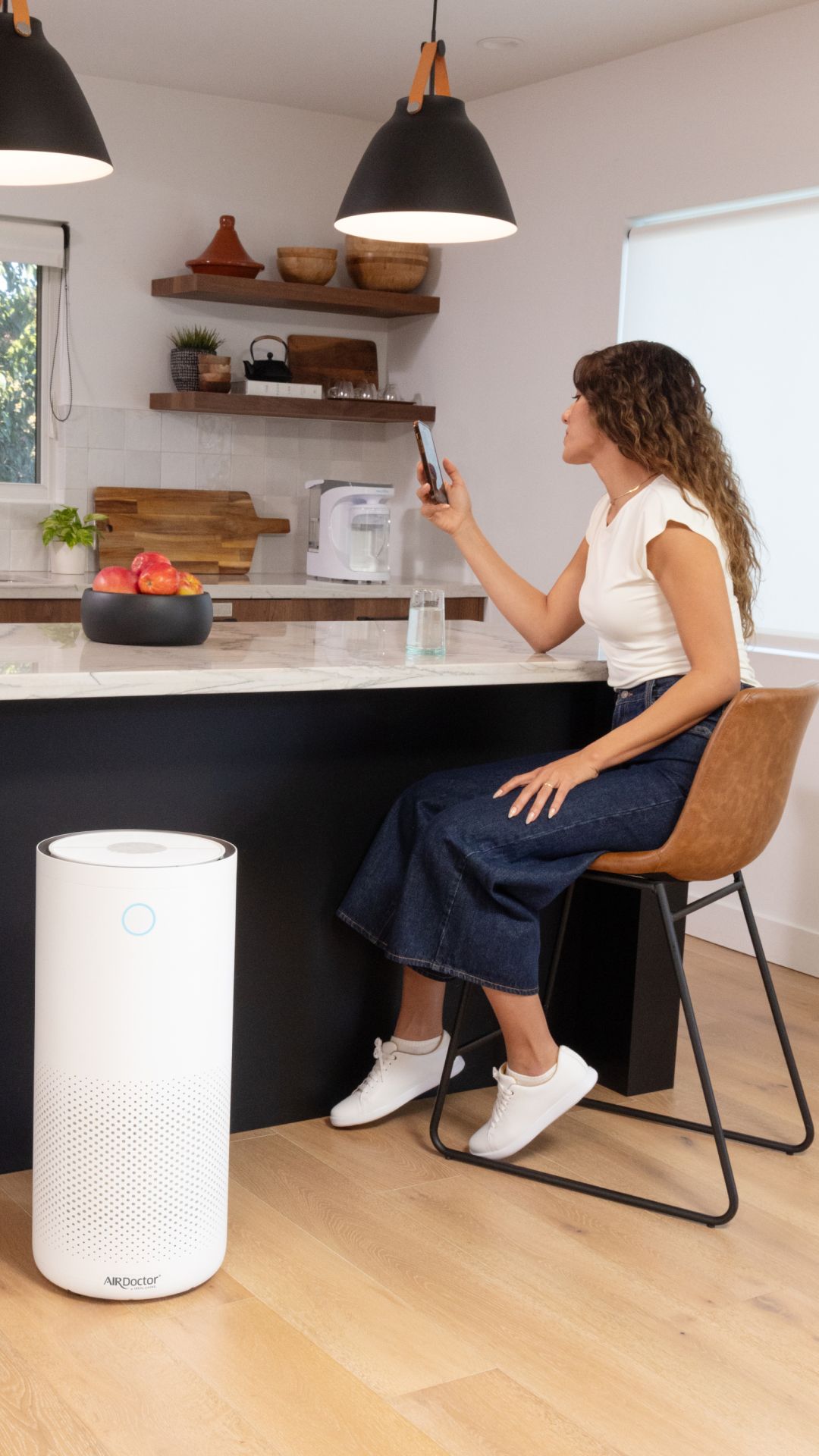
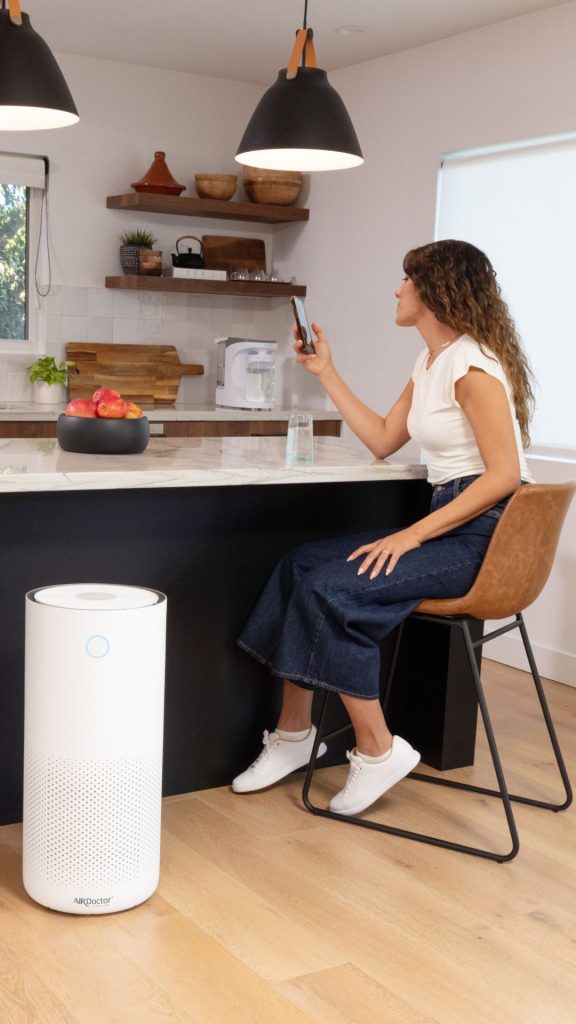
Both versions provide the same basic air-cleaning job. The Smart model adds Wi-Fi, app control, and an air-quality forecast. I would pay extra for it only if remote control or app monitoring is something you know you will use. Auto mode and the unit’s own air-quality sensor already cover the main day-to-day function.
Noise and daily use
Expect the lower settings to be the easiest to live with and the higher settings to be clearly audible. That is normal for a purifier moving more air. For a bedroom, think about where the unit will sit and whether you are comfortable sleeping with fan noise. The wheels help if you want to move it, but a purifier works best when it stays in the room where it is needed.
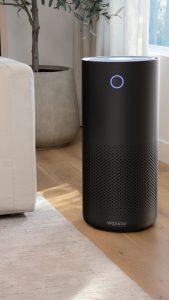
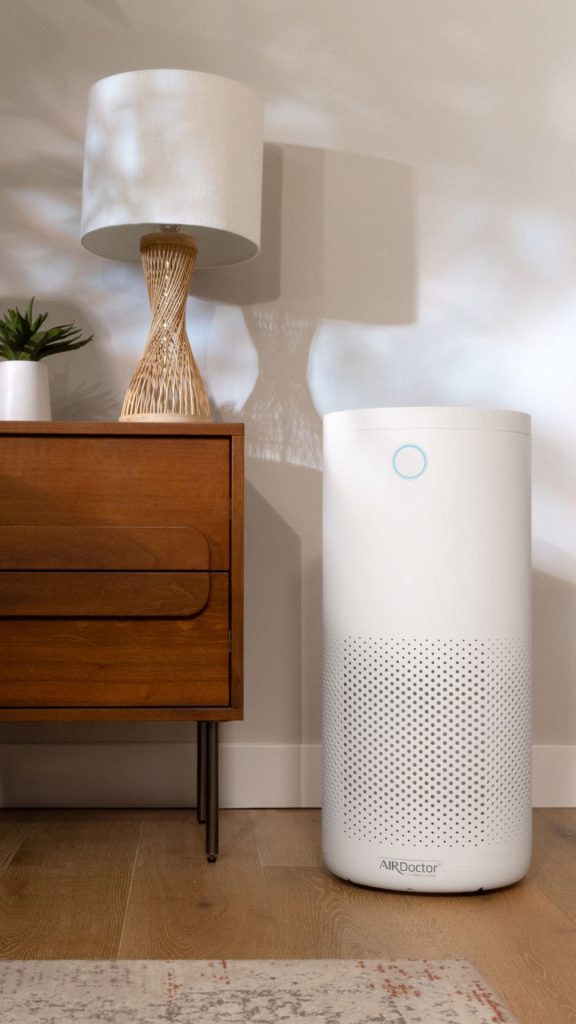
The cylindrical shape gives the 4000 a smaller-looking footprint than some boxy large-room machines. Leave space around the intake rather than pushing it against furniture or into a corner.
AirDoctor 4000 vs. 3500 and 5500
| Model | Coverage at 4 ACH | Smoke CADR | Weight |
|---|---|---|---|
| AirDoctor 3500 | 630 sq. ft. | 340 CFM | 18 lb |
| AirDoctor 4000 | 694 sq. ft. | 370 CFM | 15.8 lb |
| AirDoctor 5500 | 1,043 sq. ft. | 556 CFM | 33 lb |
The 4000 sits closer to the 3500 than the 5500 in airflow. Choose it over the 3500 if you prefer the round design, 360-degree intake, or slightly higher CADR. Choose the 5500 when the room truly needs the extra airflow and you have space for a larger, heavier unit. My separate AirDoctor 3500 vs. 5500 comparison goes into those two models in more detail.
What I would consider before buying
- Room size: use the four-air-changes-per-hour figure, not the biggest coverage number you see in an ad.
- Filter cost: price a year of replacements before deciding.
- Noise: stronger airflow means more fan noise.
- Evidence: the specifications here come from AirDoctor. I have not independently measured this model.
- Placement: make sure the round intake will have open space around it.
Who should buy the AirDoctor 4000?
The 4000 makes sense if you want a purifier for a large room, want automatic particle sensing, and prefer a compact cylindrical design. It is also a reasonable middle step when the 3500 feels marginal but the 5500 is larger than you need.
Skip it if replacement-filter cost is your main concern, you need a quiet machine at maximum speed, or your room is small enough for a less expensive purifier. It is also worth comparing verified CADR and filter prices across brands instead of buying on the UltraHEPA name alone.
AirDoctor 4000 FAQ
How large a room can the AirDoctor 4000 handle?
AirDoctor rates it for 694 square feet at four air changes per hour. Use that figure when comparing it with other purifiers.
How often do the filters need to be replaced?
AirDoctor recommends about every six months for both filter types in the 4000. Actual life depends on use and air quality.
Does the AirDoctor 4000 have an app?
The Smart version has Wi-Fi and app features. The Classic version does not.
Is the AirDoctor 4000 better than the 3500?
It has a slightly higher smoke CADR and a different round design, but “better” depends on the room and your budget. The difference in rated airflow is not huge.
More AirDoctor guides
- Compare every current AirDoctor model
- See AirDoctor filter costs by model
- Compare the AirDoctor 2000 and 3500
Sources
- AirDoctor 4000 product specifications
- AirDoctor filter replacement guidance
- US EPA guide to air cleaners and air filters
AirDoctor maintenance help
For filter alerts, red lights and sensor questions, use the AirDoctor troubleshooting guide.